
Scouts: YouShape: Shape Your Troop
Scouts shape the Troop through Troop Forums and Patrols that actually lead.
A Troop Forum is a meeting of the whole Troop — together or in Patrols — where everyone gives their views on the programme and how the Troop is run. It is the single most effective youth shaped habit a Troop can build.
Image
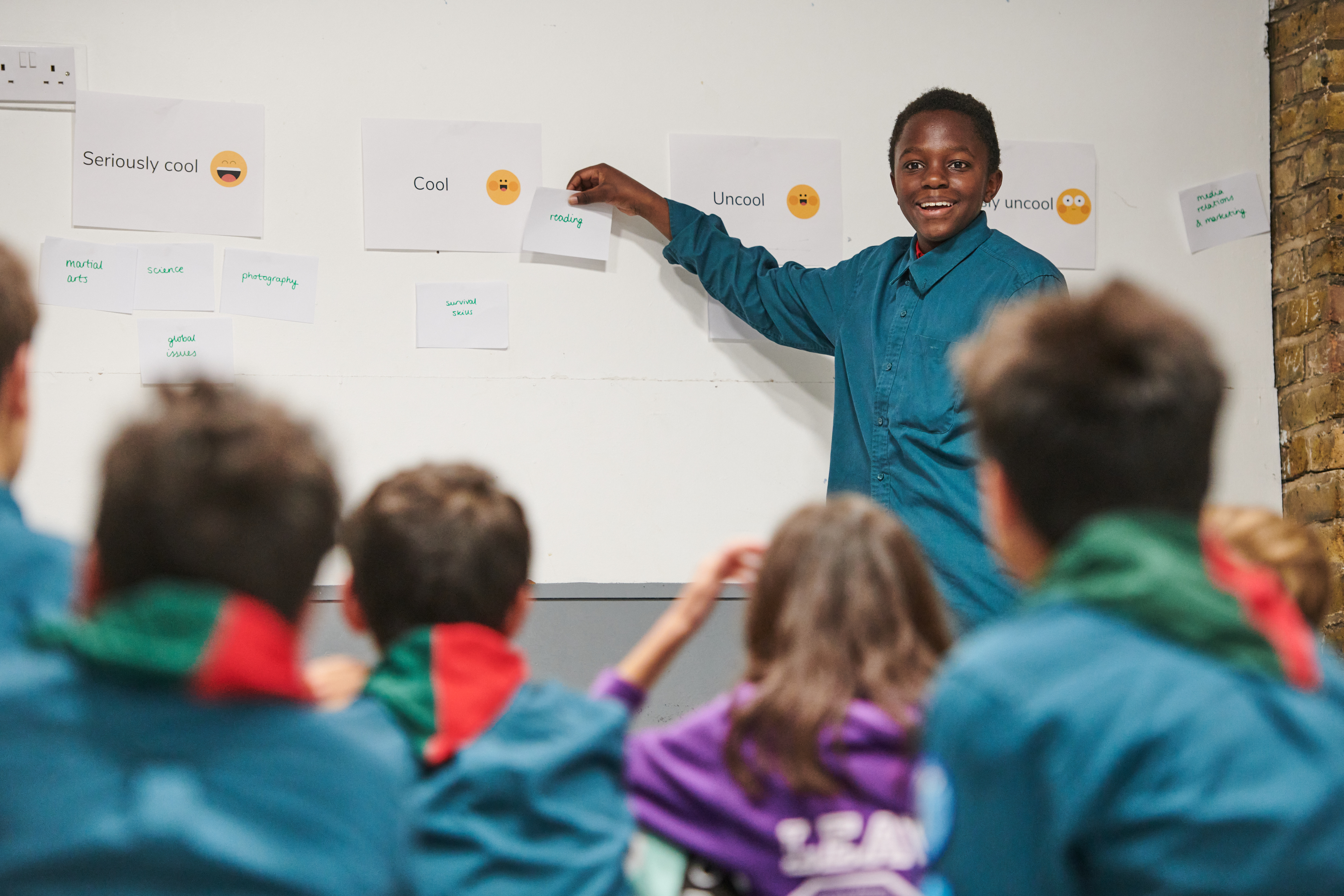
The YouShape Award in Scouts
Image
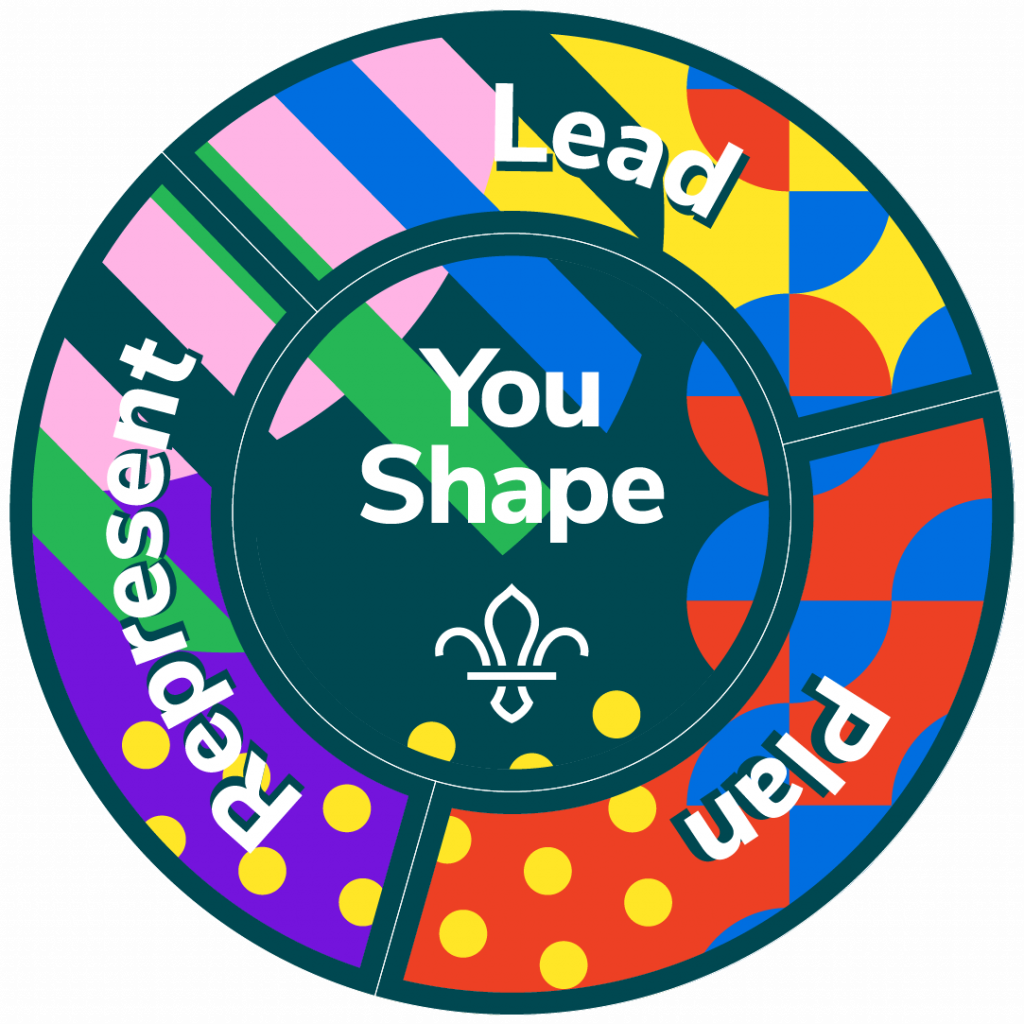
The Scouts YouShape Award is four badges — the central YouShape badge first, then Plan, Lead and Represent in whatever order they choose. Scouts set their own requirements with their volunteer team and decide together when each one has been met. This is the only badge where the young person decides.
Read the national Scouts YouShape Award requirements
Plan, Lead, Represent in Scouts
Every South London YouShape page uses the same three words. They are the three outer badges of the YouShape Award, and they are also the three things a young person can actually be given: a say in the plan, a turn at leading, and a voice that carries beyond the room.
Plan is thinking creatively, working together and planning activities. Lead is supporting others, delivering the programme and stepping up on nights away. Represent is telling others about it and speaking up for the group.
Plan
- Take an idea to Troop Forum and turn it into a plan
- Plan and cost a night, a hike or part of a camp with your Patrol
- Help set the Troop programme for the term
Lead
- Lead an activity, a ceremony or a Patrol on camp
- Take on Patrol Leader or Assistant and use the responsibility
- Run a session for the younger sections
Represent
- Represent your Patrol at Troop Forum or the Patrol Leaders' Forum
- Represent the Troop at a District or County youth forum
- Put the Troop's case to the Group Trustee Board
YouShape in one night
A complete Scouts session where the young people decide what happens next. It uses activity cards from this site, so you can print the night and run it as it stands. Download this session plan (PDF)
Quick Fire YouShape
Fifteen-minute Troop Forum, every fortnight
In Patrols. One question, five minutes, feed back to the room, decide by ballot or show of hands. Frequency beats formality every time.
Patrol takes the programme
Each Patrol owns one night this term — they choose it, plan it, cost it and run it. You keep the permit and the risk assessment.
More activities are at the bottom of this page.
Closing the loop with Scouts
Asking is the easy half. Young people disengage when nothing visibly changes, so every South London youth forum ends the same way, in the same four lines. Say it out loud, then put it on the wall.
Image
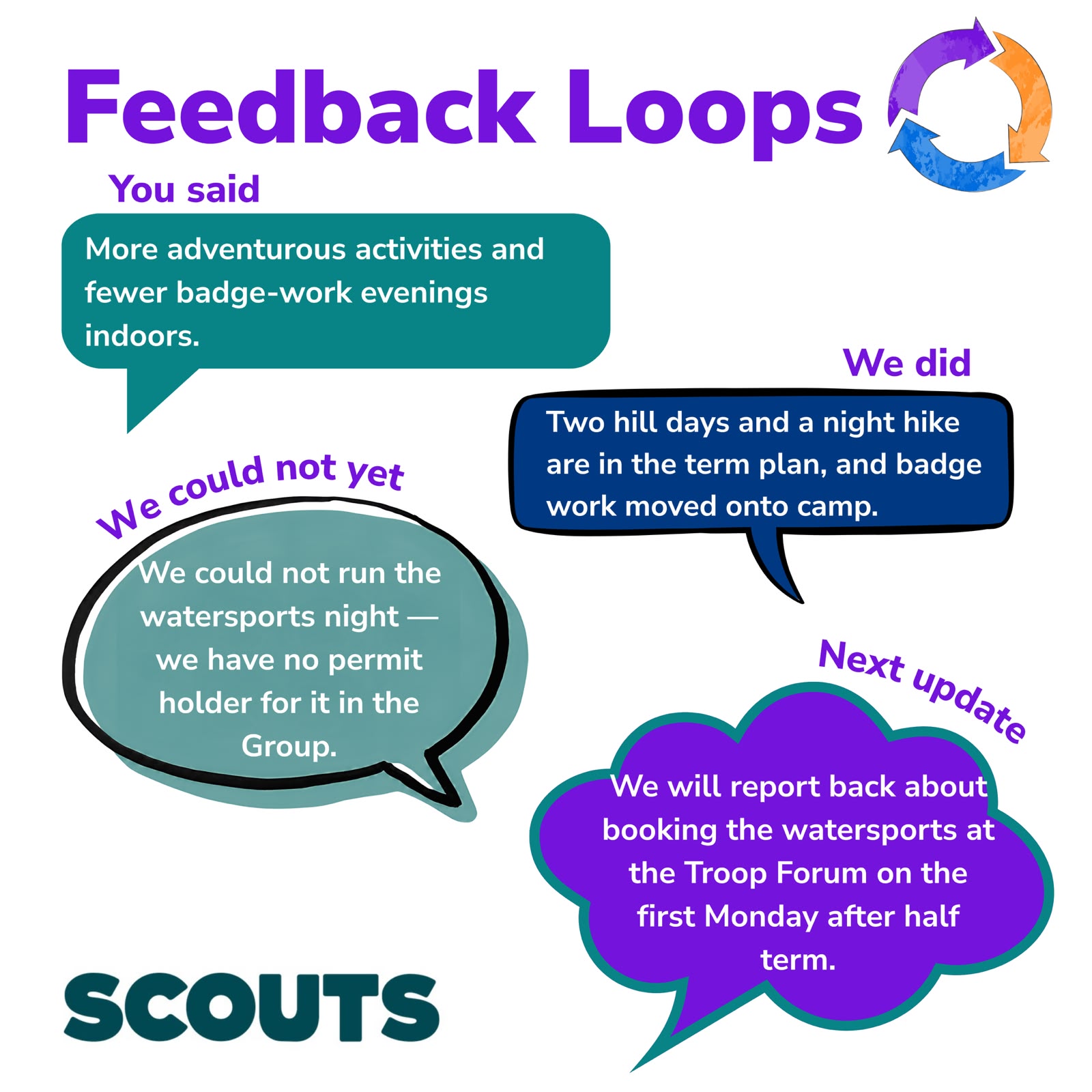
Where the Programme becomes theirs
Patrols that plan, cost and run their own nights are the clearest version of the strategy’s Programme pillar in action — fun, relevant and inclusive, because the people it is for designed it.
How this relates to the strategy
Every young person is building the skills, character and confidence to thrive, with meaningful opportunities to lead. Young people are not just shaped by Scouts; they are shaping it. How Scouts youth shaped Scouting delivers the strategy
Not sure where to start?
Start with one question
Pick one thing you genuinely have not decided yet, ask it next week, and act on the answer. That is a youth forum.My youth shaped survival guide
Ask your Youth Lead
Your District Youth Lead can come and run a forum with your Troop, support your Patrol Leaders to get started, or help introduce YouShape and wider youth-shaped Scouting. Find your Youth Lead
Troop Forum
Run a Troop Forum during a normal meeting. Fifteen or twenty minutes, a small number of clear questions, and decisions the Scouts can genuinely influence.
You could ask what they want to do next term, what activities should be included on camp, where they would like to visit, which skills they want to learn, or what they would change about the Troop.
You might also know this as a Troop Council or Patrol Leaders’ Council — whatever you call it, the important thing is that Scouts have genuine influence over what happens and can see the results.
Making sure every Scout is heard
A forum that only works for confident talkers is not youth shaped — it just amplifies the loudest. Every young person has the right to contribute, and some will need extra time, support or a different way in. Never underestimate anyone’s ability to give their view; there are lots of ways to communicate feelings and ideas.
Use Patrols
Scouts may find it easier to discuss ideas in their Patrol before feeding back to the whole Troop.
Give each Patrol the same question, allow time for discussion and ask them to agree their main ideas. A Patrol Leader can feed these back, but make sure they represent the Patrol rather than only giving their own opinion.
Patrol discussions are also a good opportunity for Scouts to practise listening, negotiating and reaching decisions together.
Encourage turn-taking
Give everyone space to contribute without being interrupted. This might mean going around the Patrol one person at a time, using a talking object, or asking everyone to write down one idea before the discussion starts.
A Scout can take responsibility for chairing the discussion or recording the ideas.
Set the ground rules first
Agree that everyone gets a chance to contribute, people listen to each other and different opinions are respected.
Older and more confident Scouts can easily dominate discussions without meaning to. Make it clear that good leadership includes making space for other people to speak.
Think about how you ask
Specific questions can produce much more useful answers than very broad ones.
Instead of:
“What do you want to do next term?”
try:
“We have space for one trip next term. Where should we go and what would you like to do there?”
Or:
“We have three evenings free in the programme. What skills or activities should we use them for?”
For an autistic young person, or anyone who finds open-ended questions difficult, giving some clear starting options can make it easier to contribute before opening the conversation more widely.
Give processing time
Do not expect everyone to answer immediately. Give Scouts a minute to think, let them write ideas down first, or come back to someone later.
For bigger decisions, share the questions before the meeting. Scouts can think about their answers, discuss them with others and come prepared with ideas.
Offer more than one way in
Speaking, writing, anonymous surveys, sticky notes, voting, ranking activities, moving around the room or using an ideas box.
Several methods in one session means Scouts who do not enjoy speaking in front of the whole Troop can still have exactly the same influence.
Use photos and past programmes as memory aids
Some young people find it difficult to remember everything they have done over a term.
Put out photos, the previous programme or a list of recent activities and ask Scouts to identify what worked well, what they would change, what they would do again and what was missing.
Let someone speak for them
A Scout may be happier sharing their view with a Patrol Leader, volunteer, Young Leader or another Scout they trust.
They can ask that person to raise their point with the wider group, or contribute anonymously through a survey or ideas box.
Give Scouts responsibility
At Scout age, young people should increasingly be able to help organise and run the process themselves.
Scouts could:
- chair the Troop Forum
- set the questions
- run Patrol discussions
- record the ideas
- organise a vote
- present the results
- turn agreed ideas into programme plans
- report back at the next meeting.
Volunteers are there to support and make sure the process is safe and realistic — not to make every decision themselves.
Show them what happened next
If Scouts give their views, make sure they know what happened because of them.
“Last term you told us you wanted more adventurous activities, so climbing and kayaking are in this term’s programme.”
If an idea cannot happen, explain why. Cost, safety, availability or travel might mean an idea needs to change, but involve the Scouts in finding an alternative rather than simply saying no.
Closing the feedback loop is what turns asking young people for ideas into genuinely youth-shaped Scouting.
Use Patrol Leaders’ Councils for bigger decisions
For decisions that need more discussion, bring Patrol Leaders and Assistant Patrol Leaders together for a Patrol Leaders’ Council.
They can gather opinions from their Patrols beforehand, discuss them together and take the decisions or options back to the wider Troop.
This can work particularly well for:
- building the termly programme
- planning camps and residentials
- choosing trips and activities
- reviewing previous events
- deciding how part of the Troop budget should be spent
- choosing equipment
- planning community projects
- setting Troop expectations
- feeding views into District or County youth forums.
A Patrol Leaders’ Council should not become a small group making every decision for everyone else. Patrol Leaders are there to represent their Patrols, and the whole Troop should still have regular opportunities to contribute directly.
Let Scouts help plan the programme
Move beyond simply asking Scouts to choose between activities already selected by adults.
Give them a blank section of the programme and a few realistic constraints — such as the budget, available evenings and equipment — and ask them to fill it.
A Patrol could take responsibility for planning one meeting, or Scouts could work in groups to design different evenings before the Troop votes on which ideas to use.
As confidence grows, young people can take responsibility for organising and delivering more of what they have planned.
Talk about money
Where appropriate, let Scouts understand the real choices behind the programme.
You could say:
“We have £200 available for our end-of-term activity. What should we spend it on?”
Giving young people realistic information about cost helps them make meaningful decisions and understand why some choices involve compromises.
Let Scouts lead
Youth-shaped Scouting is not only about young people choosing activities. Scouts should also have opportunities to turn their ideas into action.
A Scout might lead a game, teach a skill, organise part of a camp, contact another section, introduce a visitor or take responsibility for part of an evening they helped plan.
Start with the level of responsibility that is right for them and build from there.
Represent the Troop
Encourage Scouts to take their ideas beyond their own meetings.
They could represent the Troop at a District or County youth forum, speak to the District Youth Lead, contribute to a consultation, meet local decision makers or collect the views of their Patrol before attending a wider event.
Make sure representatives know they are there to share the views of other Scouts as well as their own.
Explain the words we use
“YouShape”, “forum”, “Troop Council” and “Patrol Leaders’ Council” may mean nothing to a new Scout, and a young person who takes things literally may find unfamiliar terms confusing. Say what they mean.
“YouShape means Scouts having a real say in what we do, helping make the decisions and making some of those ideas happen.”
Scouting speaks to all: a volunteer’s guide to speech, language and communication needs · Scouts with additional needs · Additional needs and disabilities guidance