
Cubs: YouShape: Your Pack, Your Ideas
Cubs shape the Pack through Pack Forums and real jobs in their Six.
Cubs are old enough to run things and quick to notice when they are not being listened to. Pack Forums work best in Sixes, led by Sixers and Seconders, with volunteers on hand rather than in charge.
Image
The YouShape Award in Cubs
The Cubs YouShape Award is four badges — the central YouShape badge first, then Plan, Lead and Represent in whatever order they choose. Cubs set their own requirements with their volunteer team and decide together when each one has been met. This is the only badge where the young person decides.
Read the national Cubs YouShape Award requirements
Plan, Lead, Represent in Cubs
Image
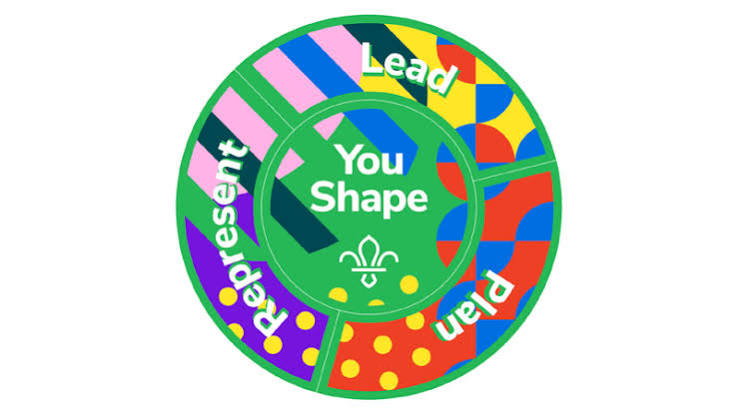
Every South London YouShape page uses the same three words. They are the three outer badges of the YouShape Award, and they are also the three things a young person can actually be given: a say in the plan, a turn at leading, and a voice that carries beyond the room.
Plan is thinking creatively, working together and planning activities. Lead is supporting others, delivering the programme and stepping up on nights away. Represent is telling others about it and speaking up for the group.
Plan
- Bring an idea to Pack Forum and see it through
- Plan a game, a night or part of a camp with your Six
- Help choose the badges the Pack works on
Lead
- Lead a game, an activity or a ceremony
- Take on Sixer or Seconder and use it properly
- Buddy a new Cub through their first few weeks
Represent
- Speak for your Six at Pack Forum
- Represent the Pack at a District event or youth forum
- Tell the Group or parents what the Pack decided
YouShape in one night
A complete Cubs session where the young people decide what happens next. It uses activity cards from this site, so you can print the night and run it as it stands. Download this session plan (PDF)
Quick Fire YouShape
Sixers run the forum
Give each Sixer one question and five minutes. They run the discussion in their Six and report back. You take notes and stay out of it.
One night, fully handed over
Pick a night. A Six plans it, leads the games and runs the opening. You hold the risk assessment and the kettle.
More activities are at the bottom of this page.
Closing the loop with Cubs
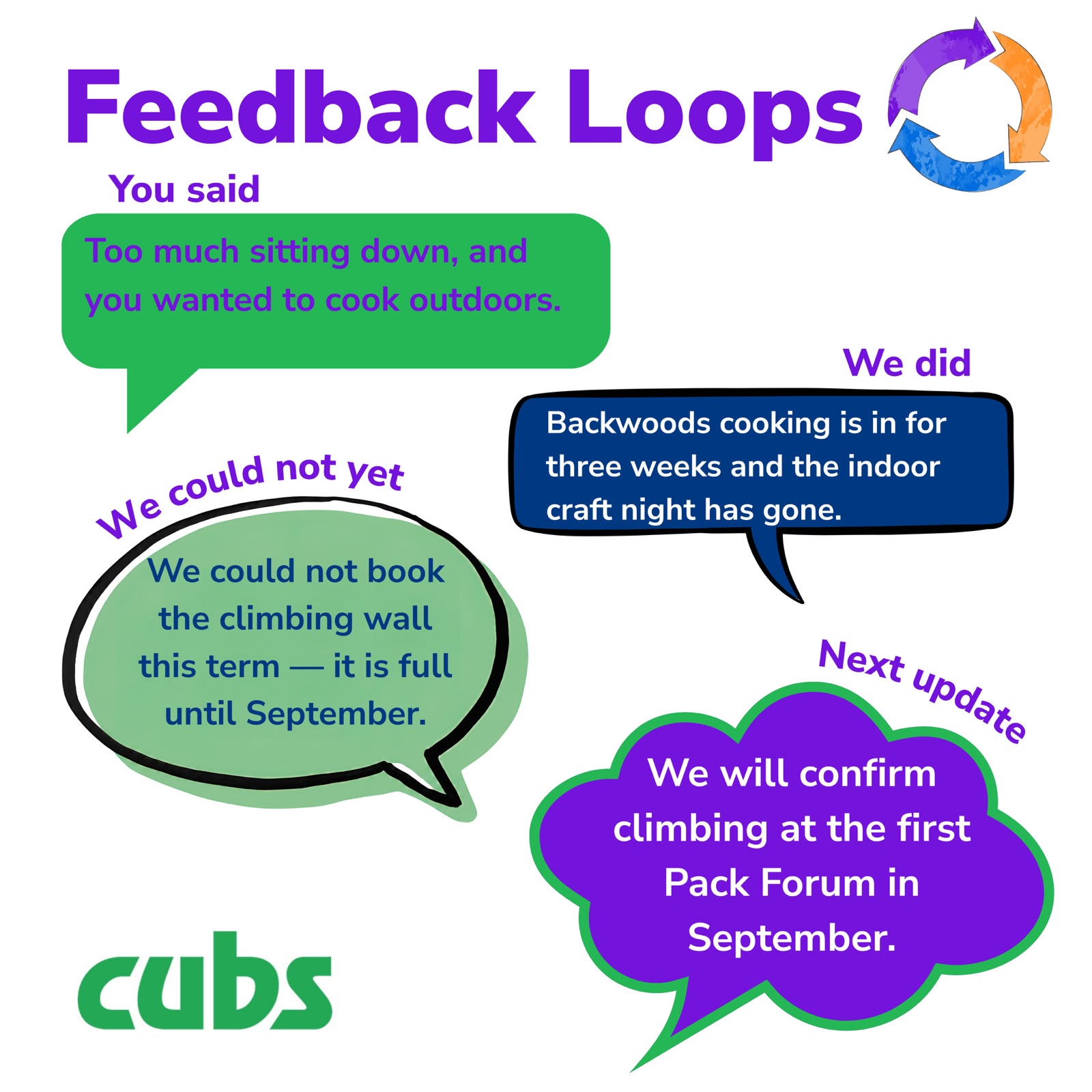
Asking is the easy half. Young people disengage when nothing visibly changes, so every South London youth forum ends the same way, in the same four lines. Say it out loud, then put it on the wall.
Image
Real responsibility, really early
Sixers and Seconders are the Programme’s first proper leadership roles. Rotating them termly and letting the Pack help choose is how a Cub gains skills for life rather than a stripe.
How this relates to the strategy
Every young person is building the skills, character and confidence to thrive, with meaningful opportunities to lead. Young people are not just shaped by Scouts; they are shaping it. How Cubs youth shaped Scouting delivers the strategy
Not sure where to start?
Start with one question
Pick one thing you genuinely have not decided yet, ask it next week, and act on the answer. That is a youth forum. My Youth Shaped Survival Guide
Ask your Youth Lead
Your District Youth Lead can come and run a forum with your Pack, support a Sixers’ meeting, or present the first few YouShape badges. Find your Youth Lead
Pack Forum
Run a short Pack Forum during a normal meeting. Ten or fifteen minutes, one or two clear questions, and something the Cubs can genuinely influence.
You could ask what activities they want next term, where they would like to visit, what theme they want for camp or what they would change about Pack nights.
You might also know this as a Pack Council or Sixers’ Council — the important thing is that Cubs get a genuine say and can see what happens as a result.
Making sure every Cub is heard
A forum that only works for confident talkers is not youth shaped — it just amplifies the loudest. Every young person has the right to contribute, and some will need extra time, support or a different way in. Never underestimate anyone’s ability to give their view; there are lots of ways to communicate feelings and ideas.
Use Sixes
Cubs may feel more comfortable sharing ideas in their Six before speaking to the whole Pack. Give each Six the same question, let them discuss it together, then ask a Sixer or another Cub to feed back their ideas.
This also gives Cubs more opportunities to practise listening, discussing and representing other people’s views.
Encourage turn-taking
Pass an object around the circle — only whoever is holding it speaks. Or ask each Six to take turns contributing one idea at a time. A volunteer or Cub can scribe.
Set the ground rules first
Agree that everyone gets a chance to speak, nobody interrupts and ideas are treated respectfully. Quieter Cubs contribute far more when they know they will not be shouted over.
Think about how you ask
Specific questions are often more accessible than very open ones.
Instead of:
“What should we do next term?”
try:
“Would you rather have more outdoor activities, visits or creative activities next term?”
You can then ask follow-up questions once everyone has had an initial way into the discussion.
For an autistic young person, “which of these three activities would you most like to do?” may work much better than “what activity would you choose?”
Give processing time
Offer to come back to someone, let them hear other ideas first or give everyone a minute to think before asking for answers.
For bigger decisions, share the questions the week before. This gives Cubs time to think and lets a parent or carer help them form an answer if needed.
Offer more than one way in
Speaking, writing, drawing, voting, moving around the room, placing stickers on choices or using an anonymous ideas box.
Several methods in one session keeps things more interesting and means Cubs who are less confident speaking in front of the Pack can still contribute equally.
Use photos as memory aids
Some young people find it hard to recall or picture past activities. Show photos from recent Pack nights, camps and visits and ask what they enjoyed, what they would change and what they would like to do again.
Let someone speak for them
A Cub may give their views more easily one to one, to a volunteer, Young Leader, Sixer or another Cub they trust, and can ask that person to share their idea with the Pack.
Give Cubs responsibility
As Cubs become more confident, let them help run the forum themselves.
A Sixer could introduce the question, another Cub could count the votes, someone else could write down the ideas and another could report back at the end.
Youth-shaped Scouting is not just about asking Cubs what they want — it is also about giving them opportunities to take increasing responsibility for making things happen.
Show them what happened next
If Cubs ask for more outdoor games and you add them to the programme, tell them.
“Last month you told us you wanted more outdoor activities, so tonight’s activity came from your Pack Forum.”
If something cannot happen, explain why and involve them in finding another option. Cubs are much more likely to keep contributing when they can see that adults have listened.
Use Sixers’ Councils for bigger decisions
For decisions that need more discussion, bring Sixers and Seconders together for a short Sixers’ Council.
They can gather ideas from their Sixes beforehand, discuss them together and then take the outcome back to the Pack.
This can work particularly well for:
- planning parts of camp
- choosing activities for the next term
- reviewing Pack nights
- suggesting trips and visits
- deciding how to spend part of the Pack budget
- planning a charity or community project
- feeding views into a District or County youth forum.
Make sure a Sixers’ Council complements wider Pack consultation rather than replacing it — every Cub should still have opportunities to contribute.
Explain the words we use
“YouShape”, “forum”, “Pack Council” and “Sixers’ Council” may mean nothing to a new Cub, and a young person who takes things literally may find them confusing. Say what they mean.
“YouShape means Cubs helping decide what happens at Cubs.”
Scouting speaks to all: a volunteer’s guide to speech, language and communication needs · Scouts with additional needs · Additional needs and disabilities guidance